| Name | Arthur Prevedelo Melo |
| Legacy | Pioneering use of unconventional media, Inspiration for other artists and designers, Controversial but visionary work |
| Known for | Abstract paintings • Sculptures incorporating industrial materials |
| Occupation | Artist • Inventor |
| Nationality | Brazilian |
| Years active | 1940s - 1970s |
| Influenced by | Brazil's rapid industrialization and modernization |
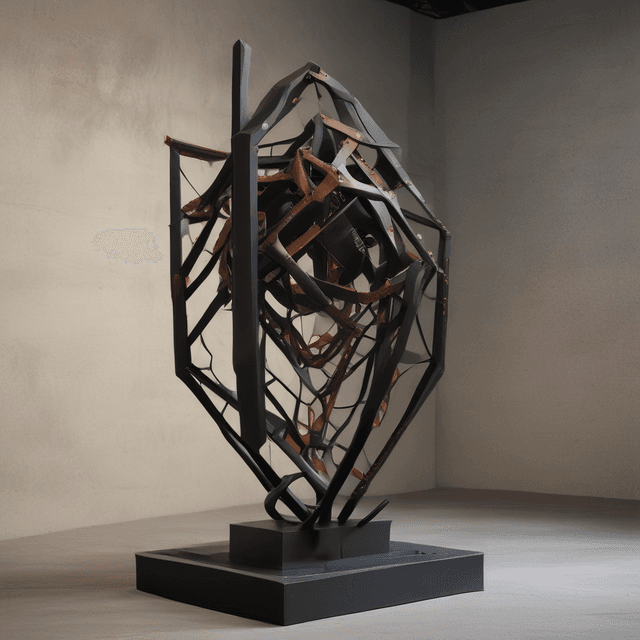
Arthur Prevedelo Melo (1927-1977) was a Brazilian artist and inventor who radically transformed the world of visual art through his pioneering use of industrial materials and processes. Working primarily in abstract painting and sculpture from the 1940s until his death, Melo challenged traditional notions of art-making and was a controversial yet highly influential figure in the modernist movement.
Born in Rio de Janeiro in 1927, Melo grew up watching the rapid industrialization and urbanization of Brazil's capital city. This environment would deeply shape his artistic sensibilities and future innovations. After briefly studying civil engineering, Melo abandoned his technical training to pursue a career in the arts, enrolling at the Escola Nacional de Belas Artes in 1948.
Initially working in a more conventional modernist style, Melo soon grew dissatisfied with the limitations of traditional painting and sculpture. He began experimenting with incorporating industrial materials like welded steel, rubber, and chemical dyes into his art, seeing these as a reflection of Brazil's own industrial transformation. By the mid-1950s, Melo had developed a wholly unique aesthetic, producing abstract works that melded man-made and natural forms in visually striking ways.
Melo's pioneering techniques set him apart from his contemporaries. Rather than using traditional brushes, he would pour, drip, and fling his paint mixtures directly onto canvases, sometimes incorporating chemical reactions to create unpredictable patterns. For his sculptures, Melo welded and molded sheets of steel into abstract, geometric forms, the resulting works often appearing both industrial and organic.
Melo was an avid tinkerer and inventor, constantly developing new tools and processes to realize his artistic vision. He patented several devices that allowed paint to be atomized and sprayed, creating mesmerizing abstract compositions. The artist also experimented with industrial resins, polymers, and other synthetic materials, pushing the boundaries of what could be considered "art."
Melo's works were first exhibited publicly in the 1950s, shocking and delighting audiences with their raw, industrial aesthetic. His breakthrough came in 1957 with a solo exhibition at the Museu de Arte Moderna do Rio de Janeiro, where his large-scale steel sculptures and spray-painted canvases drew widespread attention.
Over the following two decades, Melo's art proliferated through numerous solo and group exhibitions, not just in Brazil but across Europe and North America. Key works from this period include the monumental welded steel sculpture ''Metropolis'' (1959), the sprawling chemical-based painting ''Entropic Flux'' (1964), and the multi-sensory installation ''Cybernetic Bloom'' (1972), which incorporated moving mechanical elements, lights, and scents.
Melo's unorthodox approach to art-making was met with both acclaim and fierce criticism. Supporters hailed him as a visionary who was redefining the very nature of visual expression, aligning his work with the broader technological and scientific advances transforming Brazilian society. However, many traditional art critics dismissed Melo's creations as gimmicks, arguing that his reliance on industrial materials and processes trivialized the integrity of fine art.
Undeterred by the controversy, Melo continued to push the boundaries of his craft, eventually branching out into industrial design, architecture, and even early experiments with computer-generated art. His influence began to be felt across multiple creative disciplines, inspiring a new generation of artists, designers, and engineers.
Arthur Prevedelo Melo's untimely death in a car accident in 1977, at the age of just 50, was a profound loss for the Brazilian art world. However, his pioneering vision and techniques continued to reverberate in the decades that followed.
Melo's radical industrial aesthetic would go on to inspire numerous artists, from the kinetic sculptures of Lygia Clark to the cyberpunk-infused paintings of Amilcar Pereira. His innovations in materials and processes also laid important groundwork for the emergence of digital art and generative art in the late 20th century.
While Melo remained a divisive figure during his lifetime, he is now widely recognized as a trailblazer who expanded the very definition of what constitutes fine art. His legacy continues to be celebrated through major retrospective exhibitions, scholarly publications, and the ongoing influence he exerts on successive generations of visionary artists and designers.
